8 Best Auto Empty Robot Vacuums (November 2026)
The best auto empty robot vacuums include the roborock Robot Vacuum Mop with LiDAR for most homes, the MAMNV Robot Vacuum and Mop for Pet for pet hair, and the Roborock Q7 M5+ for carpeted homes.
On this page (5 sections)
The best auto empty robot vacuum for most homes is the roborock Robot Vacuum Mop with LiDAR. Its sealed 2.7L dock bag covers up to 7–9 weeks of debris, and 10000Pa suction with a dual anti-tangle brush handles pet hair on carpet and hard floors.
For the longest gap between empties, choose the MAMNV, which holds up to 90 days in its base.
Self-emptying docks changed the daily routine more than any suction number. The robot still makes its rounds, but you stop crouching over a dustbin after every run.
What separates these models is how long the dock holds debris, whether it uses a bag, and how well the brush resists hair wrap.
If you're shopping for a specific home, our guides to a robot vacuum for seniors and the best robot vacuum for an apartment narrow the field by space and controls. Read on for the full ranking and the trade-offs behind each score.
Our score weighs specs, features and the job each model handles against what a self-empty shopper wants most: fewer empties and fewer tangles.
Our picks at a glance
-
1

-
2

-
3
- 4
 Check it
Lefant Robot Vacuum and Mop Combo
Best for apartments - 5
 Best for bagless docksCheck it
- 6
 Best for multi-floor homesCheck it
- 7
 Check it
VONKO LiDAR Robot Vacuum and Mop
Best for long runtime - 8
 Check it
dreame L40 Ultra Gen 2 Robot Vacuum
Best for deep cleaning
The best auto empty robot vacuums, ranked
The roborock leads because it balances dock capacity, suction and brush design with no obvious weak spot. Every other pick wins a narrower job, from 90-day pet-hair duty to low-clearance apartment floors.
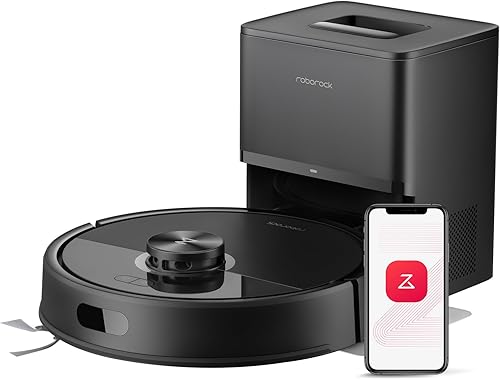
roborock Robot Vacuum Mop with LiDAR: Best for most homes
- 2.7L sealed dock bag
- 10000Pa suction
- Dual anti-tangle system
- 150-minute runtime
A sealed 2.7L dock bag covers up to 7–9 weeks between empties, and the anti-tangle brush resists hair wrap from long-haired pets.
Pros
- Up to 7–9 weeks hands-free cleaning
- LiDAR mapping for multi-room coverage
- Dual anti-tangle brush and side brush
Cons
- 65 dB when running
- App needs 2.4GHz Wi-Fi
The roborock earns the top spot by combining three things shoppers of auto empty models care about most. Its RockDock Plus holds a 2.7L sealed bag, which covers up to 7–9 weeks of pet hair and dirt before you swap it.
The bag seals shut, so dust stays inside when you pull it out.
Suction reaches 10000Pa, and the dual anti-tangle system pairs JawScrapers on the main brush with a side brush that resists hair wrap. That combination matters more than raw power once long fur is involved.
The 12.8 in cleaning path covers floor quickly, and the unit weighs 10.6 pounds.
PreciSense LiDAR builds room layouts for full coverage across several rooms. The 150-minute runtime and three water flow settings make it a genuine vacuum-and-mop unit, not a vacuum with a damp pad.
At 65 dB it's noticeable but not disruptive in a living room.
Its main trade-off is Wi-Fi: the Roborock app runs on 2.4GHz only. If your router hides that band, set up a guest network first.
For most homes, this is the one to buy.
MAMNV Robot Vacuum and Mop for Pet: Best for pet hair
- 11500Pa suction
- 90-day self-emptying base
- Anti-tangle brush roll
- 160-minute runtime
The 11500Pa motor and anti-tangle brush roll target thick fur, and the sealed base holds up to 90 days of dirt.
Pros
- 90 days between dock empties
- 11500Pa suction
- LiDAR mapping with no-go zones
Cons
- 70 dB, the loudest here
- Hair can still wrap the brush over time
MAMNV is the pick when shedding never stops. The 11500Pa motor is the strongest in this group, and the anti-tangle brush roll sends long hair into the bin instead of coiling around the roller.
MAMNV backs it with a base that holds up to 90 days of dirt in a sealed bag.
That 3.5L station is the largest bag setup here, and it changes the maintenance rhythm to roughly once a quarter. A 2-in-1 water tank and dustbin keep vacuuming and mopping in one pass without constant refills.
The kit includes five dust bags and two spare mops, so you start with supplies on hand.
LiDAR mapping supports no-go zones around pet bowls and custom routines for specific rooms. Runtime reaches 160 minutes on a 14 in path.
The honest trade-offs: 70 dB is the loudest unit in this roundup, and MAMNV notes hair may still wrap the brush occasionally, so a periodic clean keeps suction strong.
Choose it for a home with a heavy-shedding dog or several cats. Skip it if you work from home and need the quietest possible cleaning session.
Roborock Q7 M5+: Best for carpeted homes
- 2.7L sealed dock bag
- 10000Pa suction
- Dual anti-tangle design
- 150-minute runtime
The Q7 M5+ adds deep carpet and edge cleaning to the 7–9 week RockDock Plus bag, with the same anti-tangle brush as the top pick.
Pros
- Up to 7–9 weeks hands-free cleaning
- Edge and deep carpet cleaning
- Three water flow settings
Cons
- 65 dB when running
- App supports 2.4GHz Wi-Fi only
The Roborock Q7 M5+ is the carpet specialist of the roborock pair. It shares the 2.7L sealed bag and the 7–9 week emptying cycle, plus 10000Pa HyperForce suction that digs into pile and runs along edges.
Its dual anti-tangle design uses the same JawScrapers brush, and Roborock positions the model as an upgrade from the Q5 Max+ for pet hair and carpet. Three water flow settings let you mop hard floors without soaking them.
At 10.6 pounds it's light enough to carry between rooms.
PreciSense LiDAR maps multi-room layouts and adjusts routes in real time. The 150-minute runtime and 12.8 in cleaning path cover a lot of floor per charge.
At 65 dB it sits at the same noise level as the top pick.
The difference between the two roborocks is small: the Q7 M5+ leans into carpet and edge work, while the top pick keeps the same dock and brush with a broader all-floor pitch. Pick the Q7 M5+ if carpet is most of your floor.
Its app is also 2.4GHz only.
Lefant Robot Vacuum and Mop Combo: Best for apartments
- 2.99 in body height
- Up to 75 days hands-free
- 6000Pa suction
- Dual-band Wi-Fi
A 2.99 in body slips under low furniture, and the dock bags cover up to 75 days. Dual-band Wi-Fi keeps the app steady in busy homes.
Pros
- Low 2.99 in height
- 2.4G/5G Wi-Fi
- Up to 75 days hands-free
Cons
- 6000Pa is the lowest suction in the top group
Lefant makes the apartment case. The M2 Plus is just 2.99 in tall, so it slides under sofas and low cabinets that stop taller robots.
The dock uses two 2.5L bags for up to 75 days of hands-free cleaning.
Suction reaches 6000Pa across three levels, which suits hard floors and low-pile rugs more than deep carpet. LiDAR navigation builds multi-level maps and lets you split or merge rooms in the app.
The 190-degree detection angle with PSD technology helps it steer around objects as close as 1.6 in.
One feature stands out for mixed flooring: with the mop holder attached, it avoids carpets to keep them dry. Remove the holder and it boosts suction for carpet passes.
Dual-band Wi-Fi means 2.4GHz or 5GHz, which helps in crowded apartment buildings. A 300ml water tank and 250ml dustbin cover one session.
The trade-off is power. 6000Pa trails the 10000Pa and 11500Pa leaders, so very thick carpet needs more passes.
For a condo or studio, the low body and steady connection are worth more than the top suction figure.
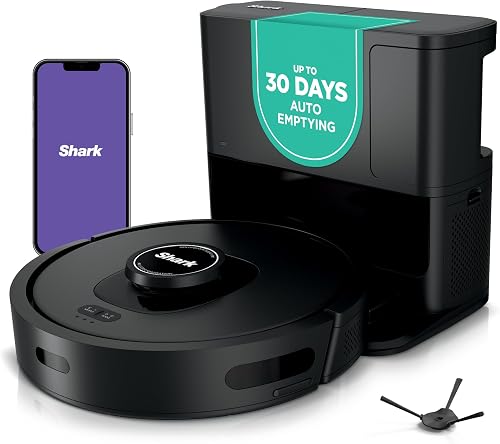
Shark AI Ultra AV2501S: Best for bagless docks
- HEPA self-empty base
- 30-day capacity
- Matrix Clean navigation
- 120-minute runtime
The bagless base holds 30 days of debris and its true HEPA filter traps 99.97% of dust and allergens down to .3 microns.
Pros
- Bagless self-empty base
- HEPA filtration
- Self-cleaning brushroll
Cons
- Shorter 120-minute runtime
- More frequent empties than bag docks
Shark is the bagless option. The AV2501S base holds up to 30 days of dirt, then you empty it without buying bags.
Its true HEPA filtration captures 99.97% of dust and allergens down to .3 microns, which matters in a home with allergy concerns.
Matrix Clean navigation moves in a grid and takes multiple passes over dirty spots. A 360-degree LiDAR map detects and avoids objects day or night.
The self-cleaning brushroll resists hair wrap, and suction adapts to floor type. It stands 4.1 in tall and weighs 14.4 pounds.
Runtime reaches 120 minutes, and Recharge and Resume sends the robot back to the dock and then to where it left off. Voice control works through Alexa or Google Assistant, and the app adds scheduling and boundaries.
Compare it with the bag docks and the math changes: no bag purchases, but roughly ten empties a year instead of five or six. The smaller 0.09L dustbin also means more trips to the base during a long clean.
Choose Shark for HEPA filtration and bagless convenience, not for the longest dock cycle.
Tikom Self-Emptying Robot: Best for multi-floor homes
- 3L self-empty base
- 6000Pa max suction
- 5 floor maps
- 150-minute runtime
The L8000 Plus saves up to 5 floor maps and stores debris in a 3L base bag, so a two-story house stays hands-free longer.
Pros
- 5 saved floor maps
- 3L base bag
- Quiet 60 dB
Cons
- 6000Pa suction
- Mop holder needs care on carpets
Tikom targets two-story homes. The L8000 Plus saves up to 5 floor maps, so the robot knows each level without remapping every time you move it.
The 3L self-empty base stores debris in a bag for up to 90 days.
Suction tops out at 6000Pa and boosts automatically on carpet. LiDAR scans in 360 degrees and plans routes to avoid missed spots and repeated passes.
Vacuum and mop run in one cycle with three suction levels and three water flow settings.
Runtime reaches 150 minutes in gentle mode, and auto-recharge and resume picks up where it stopped. The app supports 2.4GHz and 5GHz Wi-Fi plus Alexa.
At 60 dB it's the quietest unit in this roundup, and it weighs 11 pounds.
Its limits show against the leaders: 6000Pa suction puts it behind the roborocks on raw cleaning. Tikom also warns that in mop mode you should remove the mop holder or set a no-go zone to keep carpets dry.
Pick it if multiple floors matter more than maximum power.
VONKO LiDAR Robot Vacuum and Mop: Best for long runtime
- 8000Pa suction
- 60-day self-empty base
- 180-minute runtime
- 5 floor maps
Up to 180 minutes of running time covers a big open floor in one go, and the 2.5L station holds up to 60 days of debris.
Pros
- 180-minute runtime
- Up to 60 days hands-free
- Alexa voice control
Cons
- 8000Pa suction
- 4.15 kg is heavy to carry between floors
VONKO sells runtime. The S6Pro runs up to 180 minutes, the longest figure in this roundup apart from the dreame.
That covers a large open-plan floor in one session, and the 2.5L station holds up to 60 days of debris.
Suction reaches 8000Pa, enough for pet hair and everyday crumbs on hard floors and carpet. LiDAR 2.0 maps the home and saves up to 5 floors.
A 2-in-1 vacuum and mop cycle handles both surfaces, and the app adjusts water flow and suction levels.
Alexa voice control and app scheduling round out the controls. The trade-off is weight and portability: the VONKO is lighter than the Lefant at 4.15 kg vs 11 pounds.
8000Pa also sits below the 10000Pa roborocks and 11500Pa MAMNV.
VONKO notes the sealed bag lasts around two months under normal use, so the 60-day figure assumes light shedding. Choose VONKO if a single long run matters more than peak suction.
The 180-minute battery is its reason to exist, and it delivers that without giving up self-emptying or mapping.
dreame L40 Ultra Gen 2 Robot Vacuum: Best for deep cleaning
- 25,000Pa suction
- Extendable side brush and mop
- All-in-one self-cleaning dock
- 231-minute runtime
The highest suction here reaches corners with an extendable brush and mop, while the dock empties, washes the mop and dries it with hot air.
Pros
- 25,000Pa suction
- Extendable brush and mop
- Dock empties and washes the mop
Cons
- Highest price tier
- Auto-detergent module sold separately
The dreame L40 Ultra Gen 2 is the deep-clean option. Its 25,000Pa suction is far beyond anything else here, and five power levels let you dial it back for everyday runs.
An extendable side brush and mop reach into corners and under furniture.
The all-in-one dock empties the robot, washes the mop and dries it with hot air. Four carpet modes cover avoidance, suction boost, intensive cleaning and 0.41 in mop lifting.
Smart Pathfinder and 3DAdapt handle obstacle avoidance.
Runtime reaches 231 minutes in quiet mode, powered by a 5,200mAh battery. The dreame also supports off-peak charging to cut power costs.
App and voice control work with Alexa, Siri and Google Home on 2.4GHz Wi-Fi for US use. The dock is tall at 23.3 in, so check the clearance above your outlet.
The trade-offs are real. This sits in the highest price tier, and the auto-detergent module is an optional extra you buy separately.
The dreame's score of 7 reflects value for a typical self-empty shopper, not cleaning ability. If you want the deepest clean and will pay for it, this is the pick.
How these self-empty models compare
The comparison table lines up dock capacity, suction and runtime so you can see where each model gains or gives ground. The leaders cluster around 10000Pa to 11500Pa suction with 7 to 13 weeks between empties.
Noise runs from 60 dB on the Tikom to 70 dB on the MAMNV.
| Product | Best for | Capacity | Suction | Battery life | Our score |
|---|---|---|---|---|---|
| roborock Robot Vacuum Mop with LiDAR | most homes | 2.7 liters | 10000Pa | 150 minutes | 9.4 |
| MAMNV Robot Vacuum and Mop for Pet | pet hair | 3.5 liters | 11500Pa | 9.3 | |
| Roborock Q7 M5+ | carpeted homes | 2.7 liters | 10000Pa | 150 minutes | 9.1 |
| Lefant Robot Vacuum and Mop Combo | apartments | 2.5 liters | 6000Pa | 8.8 | |
| Shark AI Ultra AV2501S | bagless docks | 0.09 liters | 120 minutes | 8.4 | |
| Tikom Self-Emptying Robot | multi-floor homes | 3 liters | 6000Pa | 7.2 | |
| VONKO LiDAR Robot Vacuum and Mop | long runtime | 2.5 liters | 8000Pa | 7.1 | |
| dreame L40 Ultra Gen 2 Robot Vacuum | deep cleaning | 25000Pa | 231 minutes | 7.0 |
How we chose these auto empty robot vacuums
We compared self-emptying models by four things that decide whether the dock actually saves you work. Dock capacity and bag type came first, because a small base or a bag you forget to buy defeats the point.
Suction and brush design came second, since pet hair and carpet are the hardest everyday jobs. Navigation and mapping decided the third cut, and runtime plus noise settled the rest.
We set each score against what a self-empty shopper wants, so a premium deep-clean robot doesn't automatically outrank a steady everyday model. A 25,000Pa unit with a separate detergent module earns less than a 10000Pa unit with a sealed bag and anti-tangle brush.
This is why the ranking runs from 9.4 down to 7 despite every model here being competent.
The facts above come from the product data: dock capacity, bag type, suction figures, runtime, noise levels and navigation type. When two models share a dock and brush design, the score gap comes down to fit and value.
What to check before you buy a self-empty robot vacuum
Dock capacity and bag type decide how hands-free the vacuum really is. Everything else is secondary once you know your floor mix.
These are the questions that separate a good fit from a return.
How long do you want to go between empties?
Dock capacity sets the rhythm. The MAMNV base holds up to 90 days of debris in a 3.5L sealed bag.
The two roborocks cover 7–9 weeks in 2.7L bags. The Lefant reaches 75 days with two 2.5L bags.
The Tikom bag covers up to 90 days in a 3L base.
The Shark goes 30 days in a bagless base. Pick by your tolerance for emptying: if you want to forget the dock for a season, the MAMNV or Tikom fit.
If you'd rather never buy bags, the Shark's bagless design wins even with more frequent empties.
Bag or bagless?
A bag dock keeps dust sealed inside when you swap it, which matters if anyone in the house has allergies. Bagless bases avoid repeat purchases but send a puff of dust into the air when you tip them out.
The roborocks, MAMNV, Lefant and Tikom all use bags. The Shark is the only bagless self-empty base here.
Neither is better in every case: bags cost money over time, and bagless bases ask more of your lungs on empty day. Sealed bags also keep the dock's interior cleaner, which cuts down on wiping.
How much suction does your floor mix need?
Hard floors and low-pile rugs are fine at 6000Pa, which is what the Lefant and Tikom offer. Carpet and pet hair benefit from more.
The roborocks run 10000Pa, the VONKO 8000Pa, and the MAMNV 11500Pa. The dreame's 25,000Pa is for buyers who want the deepest possible pass.
Suction isn't the whole story. A 6000Pa robot with an anti-tangle brush can beat a 10000Pa unit with a brush that wraps.
If you have long-haired pets, weight the brush design as heavily as the number. Carpet pile matters too: thick frieze holds debris that low-pile rugs release easily.
Does the robot fit under your furniture?
Measure the lowest gap first. The Lefant is 2.99 in tall and slips under low sofas.
The Shark stands 4.1 in high. The roborock units are taller still once you count the dock height of 10.24 in.
Dock placement needs its own space. The roborock dock is part of a unit about 19.57 in long, so leave clearance for the robot to approach and seat itself.
A spare wall near an outlet is the usual answer. The dreame dock is much taller at 23.3 in, so check shelf and cabinet clearance before you commit.
If your home is large rather than tight, the best robot vacuum for a large house covers runtime and coverage in more depth.
How many floors do you need to map?
Single-floor homes only need one saved map. Two-story houses benefit from multi-floor memory.
The Tikom and VONKO both save up to 5 floors, and the Lefant builds multi-level maps too.
Moving a robot between floors means carrying it, so weight matters. The VONKO is 4.15 kg and the Lefant is 11 pounds.
A lighter unit is easier to move up and down stairs every week. If stairs are part of the plan, weigh the portability against the longer runtime.
How much noise can you live with?
Self-empty docks add a loud burst when the robot empties, so noise matters more than the running figure. The Tikom lists 60 dB and the roborocks list 65 dB.
The MAMNV is loudest at 70 dB.
If you schedule cleans while you're out, the running noise matters less than the dock's empty cycle. If you're home during the day, choose the quieter Tikom or a roborock over the MAMNV.
Which auto empty robot vacuum should you buy?
Buy the roborock Robot Vacuum Mop with LiDAR if you want the best all-round auto empty robot vacuum. It pairs a sealed 7–9 week bag with 10000Pa suction and an anti-tangle brush, and it mops with adjustable water flow.
That mix fits most homes with pets and mixed flooring.
Go a different way for a specific need. The MAMNV is the pet-hair specialist with 11500Pa and a 90-day base.
The Roborock Q7 M5+ wins on carpet and edges. The Lefant is the apartment pick at 2.99 in tall.
The Shark is for bagless HEPA filtration. The Tikom handles two stories with 5 maps.
The VONKO gives 180 minutes per run. The dreame delivers the deepest clean at 25,000Pa.
If hardwood and rugs are most of your floor, the best robot vacuum for hardwood floors covers mop and brush choices in more detail. Either way, start with the roborock unless one named need clearly outweighs its balance.
Our top 3 picks at a glance
-
1
-
2
-
3
Frequently asked questions
How long can an auto empty robot vacuum go without emptying?
It depends on the dock capacity and how dirty your floors are. The MAMNV base holds up to 90 days, the roborock bag covers 7–9 weeks, and the Shark base holds 30 days.
Heavier shedding shortens all of these.
Do self-empty docks need bags?
Some do and some don't. The roborock and MAMNV models use sealed dust bags, which keep dust inside when you swap them.
The Shark AV2501S uses a bagless base instead.
A bag dock means buying bags later.
Is an auto empty robot vacuum worth it for pet hair?
Yes, if shedding fills the robot's dustbin fast. A sealed base holds weeks of pet hair without you touching it.
The roborock and MAMNV both pair their docks with anti-tangle brushes, which matter as much as suction for long fur.
Can a self-empty robot vacuum handle carpets and hardwood?
Most models here do both. The roborock and Roborock Q7 M5+ run vacuum and mop in one cycle with adjustable water flow.
The Lefant avoids carpets when the mop holder is attached, so the pad stays off the pile.
How much floor space does a self-empty dock need?
Plan for the dock footprint plus room to slide the robot in and out. The roborock dock is part of a unit about 19.57 in long and 10.24 in high.
Leave a little clearance around it so the robot can dock cleanly.


